
By Dr Amy Boalch, Doctor & Running Coach
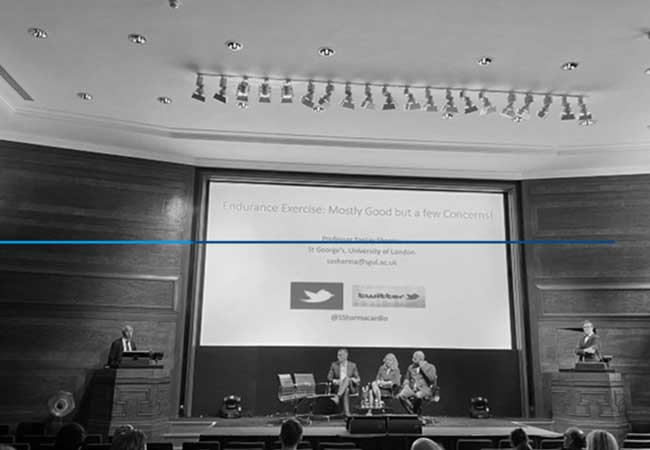
The Marathon Medicine Conference is held annually, the day before the London Marathon, and is now in its 38th year. It provides a chance for leading researchers and clinicians to share sport and exercise medicine updates amidst the buzz of the marathon. This year saw speakers covering a range of topics that included delving into the science behind Kipchoge’s marathon times and learning how we can optimise running performance into older age. This blog will provide a summary of the conference talks and hopefully tempt you to attend the next event in April 2023.
Professor Andy Jones: What Makes Kipchoge so Good? The Fourth Dimension in the Physiology of Marathon Running.
This talk couldn’t have been timed better, with Kipchoge running Berlin Marathon in 2:01:09 just a week previous. Professor Jones shared some of the physiological trends behind elite marathoners before discussing a fourth parameter which might explain why athletes like Kipchoge perform at an even higher level. This parameter was that of resilience. Professor Jones shared the Joyner Equation which models optimal marathon performance, the variables of which can be measured within the lab setting: VO2 max, lactate threshold and running economy. However, what this equation doesn’t account for is how these variables might change over the course of a marathon record attempt as fatigue sets in. Increased resilience, and therefore decreased decoupling of internal and external workloads, might be the key to exceptional performances such as in the case of Kipchoge.
Further reading: Jones AM, Kirby BS, Clark IE, Rice HM, Fulkerson E, Wylie LJ, Wilkerson DP, Vanhatalo A, Wilkins BW. Physiological demands of running at 2-hour marathon race pace. Journal of Applied Physiology. 2021 Feb 1;130(2):369-79.
Professor Julie Greeves: The Aetiology of Bone Stress Injuries in Female Athletes.
Professor Greeves provided an update on bone stress injuries. These injuries are four times as common in females with one contributing factor being the reduced cross-sectional area of female bones. Bone shape, as well as bone mineralisation, affects the risk of bone stress injury and optimising cross sectional area is vital in reducing the risk of stress injuries. This bone development mainly occurs during the pubescent period and discussion was had around the role that contraceptives may play in affecting bone health during this time – an area that requires ongoing research. Professor Greeves top tips for optimising bone health in all athletes included: sleeping >6hrs/night, restoring menstrual function, avoiding NSAID medication, optimising energy intake, and considering calcium and vitamin D supplementation.
Further reading: Coombs CV, O’Leary TJ, Tang JC, Fraser WD, Greeves JP. Hormonal contraceptive use, bone density and biochemical markers of bone metabolism in British Army recruits. BMJ Mil Health. 2021 Mar 14.
Dr Isabel Moore: The Postpartum Runner, A Unique Opportunity to Prepare for ‘Injury’.
Dr Moore used her talk to advocate for increased research into female athlete health and she discussed the unique opportunity during pregnancy in which we can educate women about rehabilitation and returning to sport in the post-partum period. Dr Moore’s work has shown that the key factors that increase the chance of a woman running in the post-partum period includes running during pregnancy, a higher running volume and a lower fear of movement. The sensation of vaginal heaviness reduced the chance of running post-partum. Dr Moore’s top tips for supporting the pregnant or postpartum athlete included good education with recognition of perinatal health considerations; meeting minimum aerobic exercise targets of at least 150 mins/week; providing supervised pelvic floor muscle exercises; and ensuring appropriate breast support both during and after pregnancy.
Further reading: Moore IS, James ML, Brockwell E, Perkins J, Jones AL, Donnelly GM. Multidisciplinary, biopsychosocial factors contributing to return to running and running related stress urinary incontinence in postpartum women. British Journal of Sports Medicine. 2021 Nov 1;55(22):1286-92.
Dr Richard Willy: Strategies to Improve the Durability of Masters Runners.
Masters athletes are runners over the age of 35 years, and they account for the fastest growing age group in marathons making up more than half of all marathoners. These athletes have unique challenges in terms of injury. We know that the greatest risk factor for injury is history of previous injury, and therefore older athletes will have greater risk due to a greater lifetime history of injuries. Dr Willy shared research demonstrating that the injuries suffered by this group differs to their younger counterparts. Soft tissue injuries predominate, rather than joint or bone injuries, with a particular tendency towards injury of the Achilles, plantar fascia, and plantar flexors. These athletes also have lower muscle quality due to fatty infiltration and endurance training alone is not enough to maintain high quality muscle mass. Training of these athletes should therefore focus on improving muscle quality and tendon health with recommendations made for strength training at high load with low repetitions. Tendon stiffness is regained at a slower rate than younger athletes and therefore greater rest between these strength sessions, i.e., training every 3 days, is likely to see better results for Masters athletes.
Further reading: Willy RW, Paquette MR. The physiology and biomechanics of the master runner. Sports Medicine and Arthroscopy Review. 2019 Mar 1;27(1):15-21.
Professor Sanjay Sharma: Cardiovascular Effects of Endurance Exercise, Mainly Good but Some Concerns.
The final talk was delivered by the Medical Director of the London Marathon himself, Professor Sanjay Sharma, with a focus on the cardiovascular changes that occur with exercise. Overwhelmingly, exercise offers significant benefits to cardiac health, although research supports exercising at four times the level of the WHO recommended physical activity guidelines to achieve optimal reductions in cardiovascular morbidity. For elite endurance athletes, however, it is recognised that some concerning cardiovascular changes have been noted in middle and older age. We know that atrial fibrillation (AF) is more common in male, middle-aged endurance athletes but we can be reassured that this is not associated with the complications we would expect to see in non-athletic AF populations. Similarly, coronary artery calcification is more common in athletes as they age, however, these plaques are calcified and morphologically different to the plaques that develop in response to smoking or high cholesterol. Again, the plaques seen in athletes are not associated with an increased risk of mortality. Despite concerns about these cardiac abnormalities, we can be reassured that endurance athletes can enjoy a longer life expectancy than the general population and thus endurance exercise remains ‘mainly good’.
Further reading: Parry-Williams G, Sharma S. The effects of endurance exercise on the heart: panacea or poison? Nature Reviews Cardiology. 2020 Jul;17(7):402-12.

If these small snippets from the conference peaked your interest, then make sure to look out for the return of the conference in April 2023. Recordings of the talks will also be made available so follow @marathonmed on Twitter for updates.
Article written by: Dr Amy Boalch
Dr Amy Boalch is a junior doctor and running coach who is passionate about improving physical activity levels for the benefit of both physical and mental health. She is currently training as a GP in Bath and completing a Masters in Sports Medicine, Exercise & Health at University College London.
