The management of head injuries in sport have been a long-standing priority for clinicians. More recently, there has been media, legal, and political interest into head injuries, and how sports are both managing and preventing concussions and head impacts. The increased interest into this area is due to advances in the scientific literature, which describe the potential impact of head injuries on short-, medium-, and longer-term health of sport participants. Reducing the risk of head injuries in sports goes beyond medical staff and can require sports to change current and long-standing policies and practices. This is complex and requires broad engagement, balancing the needs and wants of those who participate in sport, establishing what is an acceptable level of risk against the benefits of sports, alongside maintaining the commercial viability of sports. Considering the above, this session will include international experts, who will present against a range of topics, followed by an inter-disciplinary panel discussion.
Professor Ross Tucker is a Sports Scientist with a PhD in Exercise Physiology from the University of Cape Town. His doctoral research focussed on the limits of human performance and how the brain regulates this performance. He also holds a postgraduate degree in Sports Management and has experience working in both academic settings and the sports industry, particularly in high-performance environments.
His research interests include performance physiology, the limits of human performance, genetic and environmental predictors of performance, talent identification and development, the impact of technology on sport, anti-doping measures, and injury prevention and management in elite sports. Professor Tucker previously held a position at the University of Cape Town, where he conducted research and lectured on these topics before transitioning to a consulting role with various sports organisations.
Currently, he serves as a consultant to World Rugby, the governing body for Rugby Union, where he focusses on concussion and injury prevention and management. In this role, he advises on the sport’s medical and scientific strategy, which includes injury prevention through law changes, the application of laws to support these initiatives, and the study of concussion management programmes, including the global instrumented mouthguard campaign.
In addition, Professor Tucker is the High Performance and Technical Director of the Endurocad Athletics Trust, a programme that identifies talented young athletes from underprivileged communities in South Africa. The programme provides these athletes with scholarships to high school, as well as coaching, scientific, and medical support to optimise their athletic performance.
Professor Tucker has been widely published in academic journals, with over 150 peer-reviewed papers to his name, an H-Index of 43, and numerous presentations at academic and high-performance symposia.”
Mr Jamie Jones-Buchanan MBE is a former professional Rugby League player and the soon-to-be Chief Executive Officer of Leeds Rhinos Rugby League Club.
A key member of the “Golden Generation” at Leeds Rhinos, Jamie enjoyed an outstanding career, winning seven Super League Grand Finals, three World Club Challenges, three League Leaders’ Shields, and one Challenge Cup Final. He also proudly represented both England and Great Britain at international level.
In recognition of his exceptional contributions to Rugby League and to his local community, Jamie was awarded an MBE in 2022. He has long been a passionate advocate for the sport, particularly in fostering a more inclusive and welcoming environment within Rugby League and beyond.
Mr Jones-Buchanan currently serves as Chair of the Rugby Football League (RFL) Inclusivity Board, leading initiatives to promote diversity, equality, and inclusion across the game.

Dr Anna Stodter is a Senior Lecturer in Sport Coaching within the Carnegie School of Sport at Leeds Beckett University. She has a strong track record in knowledge translation, linked to her internationally recognised research into sport coaches’ learning and development. For example, Anna has led the co-creation of evidence-informed online learning resources for coaches with the English Rugby Football Union and World Rugby, aimed at promoting safer and more effective rugby tackle techniques. Based on her research, she has also designed, delivered, and evaluated numerous Continuing Professional Development workshops for sports governing bodies, including SportScotland, Sport NI, Sport Wales, UK Coaching, and UK Sport.
Alongside her background in rugby union as a former Scotland international and Saracens player, Dr Stodter is currently Head Coach of Leeds Beckett Women’s Rugby Union Team and also coaches on the Scottish Qualified Performance Pathway.
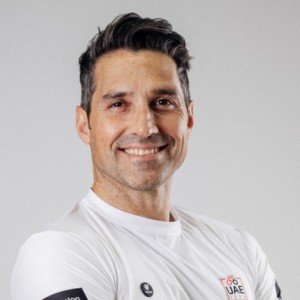
Dr Adrian Rotunno has an MBChB, MSc Sports and Exercise Medicine, BSc Physiotherapy, and BPhys Ed, and is a specialist Consultant in Sports and Exercise Medicine. He is a Clinical Director at the Cape Sports Medicine Medical Practice based at the Sports Science Institute of South Africa.
Adrian’s interests and research include working with all levels of endurance athletes, race medicine, and musculoskeletal ultrasound. Apart from his clinical work, Dr Rotunno is the Chief Medical Director for UAE Team Emirates Professional Cycling Team (world no.1 ranked cycling team 2023 and 2024), a SonoSkills musculoskeletal ultrasound trainer, Chief Medical Officer for Cape Town Spurs Football Club, Honorary Lecturer at the University of Cape Town, and a Consultant Race Doctor for Absa Cape Epic and other mass sporting events.
One of his long-term goals is to broaden awareness of healthy lifestyles and to improve clinical access to Sport and Exercise Medicine in the public sector and low access communities. In his current role as the SASMA president, he aims to bring enhanced cohesion and professional development between all sports medicine affiliates.
In Dr Rotunno’s personal life, spending time with family is his favourite activity. He also maintains a love of cycling and running and has achieved his national and provincial swimming colours.
Professor Ben Jones is Professor of Sports Science at Leeds Beckett University. He also serves as Sports Science and Medicine Research Lead at Premiership Rugby, and Head of Performance Science and Research at the Rugby Football League (RFL). In addition, he holds Visiting Professor positions at Australian Catholic University (Australia) and the University of Cape Town (South Africa).
Ben has published more than 300 peer-reviewed papers and leads numerous large-scale international research projects spanning injury surveillance, athlete monitoring, and injury prevention programmes, often embedding novel technologies. A current research priority is measuring and managing head acceleration events using instrumented mouthguards.
Professor Jones is a member of multiple government advisory groups, RFL board sub-committees, and Rugby Football Union advisory groups. Notably, he was first author on several seminal studies of COVID-19 transmission in sport, including the world’s first evaluation of SARS-CoV-2 transmission between athletes during competition.
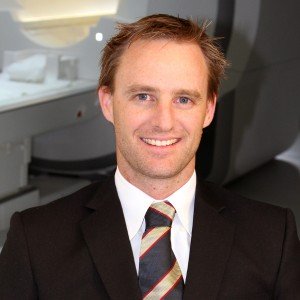
Associate Professor Andrew J Gardner is a Research Fellow at the Sydney School of Health Sciences, University of Sydney. He is also co-Director of the Hunter New England Local Health District Sports Concussion Clinic. Andrew serves as the concussion consultant for Rugby Australia and is a member of the World Rugby Concussion Working Group. Additionally, he is part of the Australian Football League (AFL) Concussion Scientific Committee.
A clinical neuropsychologist with a particular focus on sports concussion, Associate Professor Gardner’s research interests span the full spectrum of concussion. His work ranges from injury prevention through tackle techniques and injury identification via video analysis, to acute assessment through the validation of various measures, and evaluation of later-life brain and mental health in retired athletes. The translational focus of these research programmes aims to advance knowledge and improve healthcare by generating evidence-based data to inform policy development.